PROTECT, NOT PUNISH: Why NM House Refuses to Criminalise Survival
International Day for Street Children | 12 April 2026
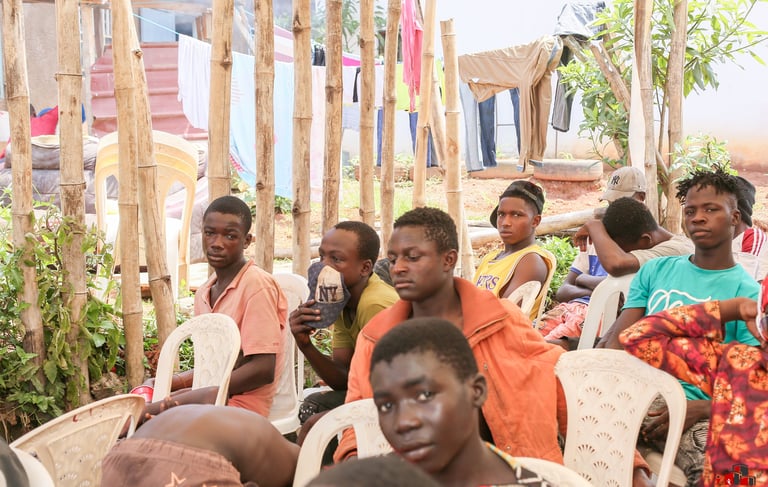
Today, across Cameroon, thousands of children will wake up on concrete.
They will search for food in trash bins. They will carry luggage at train stations for a few coins. They will sleep in groups under market stalls for safety. They will be moved along by police. They will be called names; delinquents, vagabonds, nuisances.
They are none of those things.
They are survivors.
And today, on the International Day for Street Children, NM House joins the Consortium for Street Children and our partners around the world to say one thing clearly:
Protect, not punish.
What Does "Protect, Not Punish" Mean?
It means a child begging for food is not committing a crime. It means a child sleeping in a doorway is not loitering. It means a child gathering with others for safety is not part of a gang.
These are survival behaviours; the natural response of a child who has been failed by every system meant to protect them.
Yet across Cameroon and the world, street-connected children are arrested, detained, fined, or beaten for simply trying to live another day.
That is not justice. That is criminalising poverty.
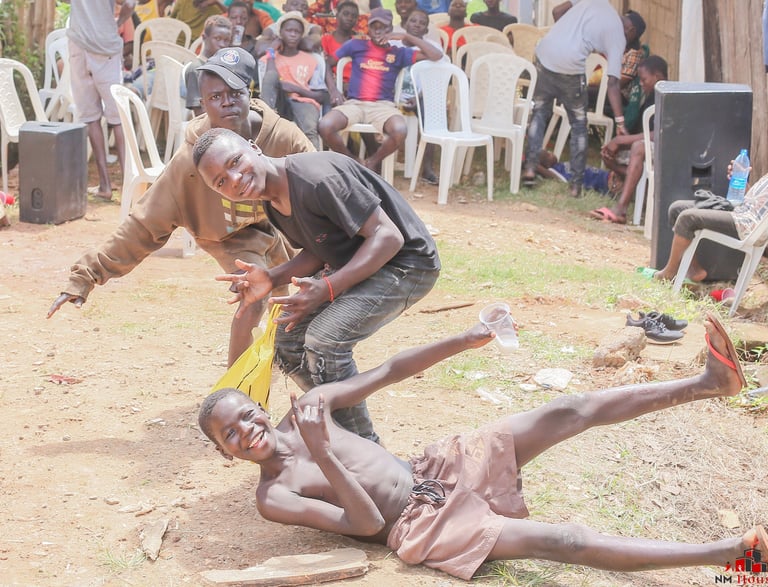
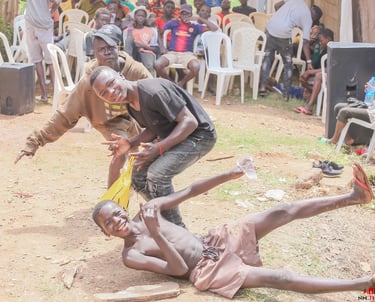
What NM House Sees Every Day.
We have watched a 12-year-old girl arrested for selling pure water without a permit. She had no permit because she had no parents, no address, no birth certificate-no legal existence.
We have watched police disperse a group of teenagers sleeping under a bridge at 2 AM. They were not causing trouble. They were trying not to be kidnapped.
We have watched a boy who ran from an abusive uncle be picked up for "vagrancy" and held for three days. No one asked why he left home. No one offered him help. They offered him a cell.
This is the reality of street-connected children in Cameroon.
And it must change.
What NM House Is Doing About It
1. We Challenge the Narrative
We do not call street children "delinquents." We call them rights-holders.
The United Nations Convention on the Rights of the Child (UNCRC) guarantees every child—every child, regardless of their situation—the right to:
- Life, survival, and development (Article 6)
- Protection from violence, abuse, and neglect (Article 19)
- A legal identity and birth registration (Articles 7 & 8)
- Be heard in decisions affecting their lives (Article 12)
- A justice system that treats them as children, not criminals (Articles 37 & 40)
General Comment No. 21; the UN's specific guidance on children in street situations makes it explicit: criminalising survival behaviours is a violation of child rights.
We use these tools. We quote them in meetings with ministers. We put them in the hands of police commanders. We will not let governments forget what they signed.
2. We Provide Legal Identity
Without a birth certificate, a child does not exist in the eyes of the law. They cannot enroll in school. They cannot see a doctor. They cannot report a crime, because who would believe someone who isn't real?
NM House has helped 160+ children, youth, and adults obtain birth certificates.
That is 160+ people who now exist. Who can now demand their rights. Who can now access justice.
3. We Advocate for Systems Change
We do not just rescue children from the street. We push to change the systems that put them there and keep them out.
We engage the Ministry of Social Affairs, the Ministry of Education, the Ministry of Youth Empowerment. We partner with the Consortium for Street Children and WASAG (West Africa Strategic Advocacy Group). We demand:
- Decriminalisation of survival behaviours (begging, sleeping in public, selling without permits)
- Child-friendly reporting mechanisms for abuse (so children can report violence without fear of being arrested themselves)
- Diversion programmes that send children to social services, not cells
- Legal identity for every child (free, accessible birth registration)
4. We Stay Independent
Here is the difference between NM House and many organisations:
We are 70% self-funded.
We run our own enterprises; mobile restaurants, rabbit farms, fish ponds, tech shops, IT center, co-working-Space, office rentals, car washes, aluminum workshops. We cap external funding at 30%.
Why does this matter for justice?
Because when we speak truth to power, no one can silence us. We do not soften our message to protect a grant. We do not look away from police abuse because the government funds us.
We answer to one person: the child still sleeping on concrete tonight.
That is what self-sustaining advocacy looks like.
What You Can Do Today
1. Change How You See Street Children
They are not problems to be solved. They are people to be protected. Start with how you speak about them. Start with how you treat them when you pass them on the street.
Justice begins with how we see.
2. Share the Message
Use the hashtags: IDSC2026 ProtectNotPunish StreetChildrenDay
Share this blog. Share the Consortium's resources. Tell your members of parliament that street children deserve protection, not punishment.
3. Support NM House
We are doing the work—on the streets, in the courts, in the ministries. But we cannot do it alone.
- Volunteer with our mobile school
- Donate to support legal identity programmes
- Partner with us to advocate for decriminalisation
A Final Word
On this International Day for Street Children, we remember:
A child who begs is not a criminal. A child who sleeps in a doorway is not a vagrant. A child who survives the street is not a delinquent.
They are children.
And children deserve justice.
Protect, not punish.
IDSC2026 ProtectNotPunish StreetChildrenDay
NM House is a Cameroonian non-profit organisation getting children off the street and keeping them off. We are 70% self-funded through our own enterprises. We answer to no donor—only to the child still sleeping on concrete.
Join us: [www.nmhouse.org](http://www.nmhouse.org) | contact.nm@nmhouse.org | +237 620303678